
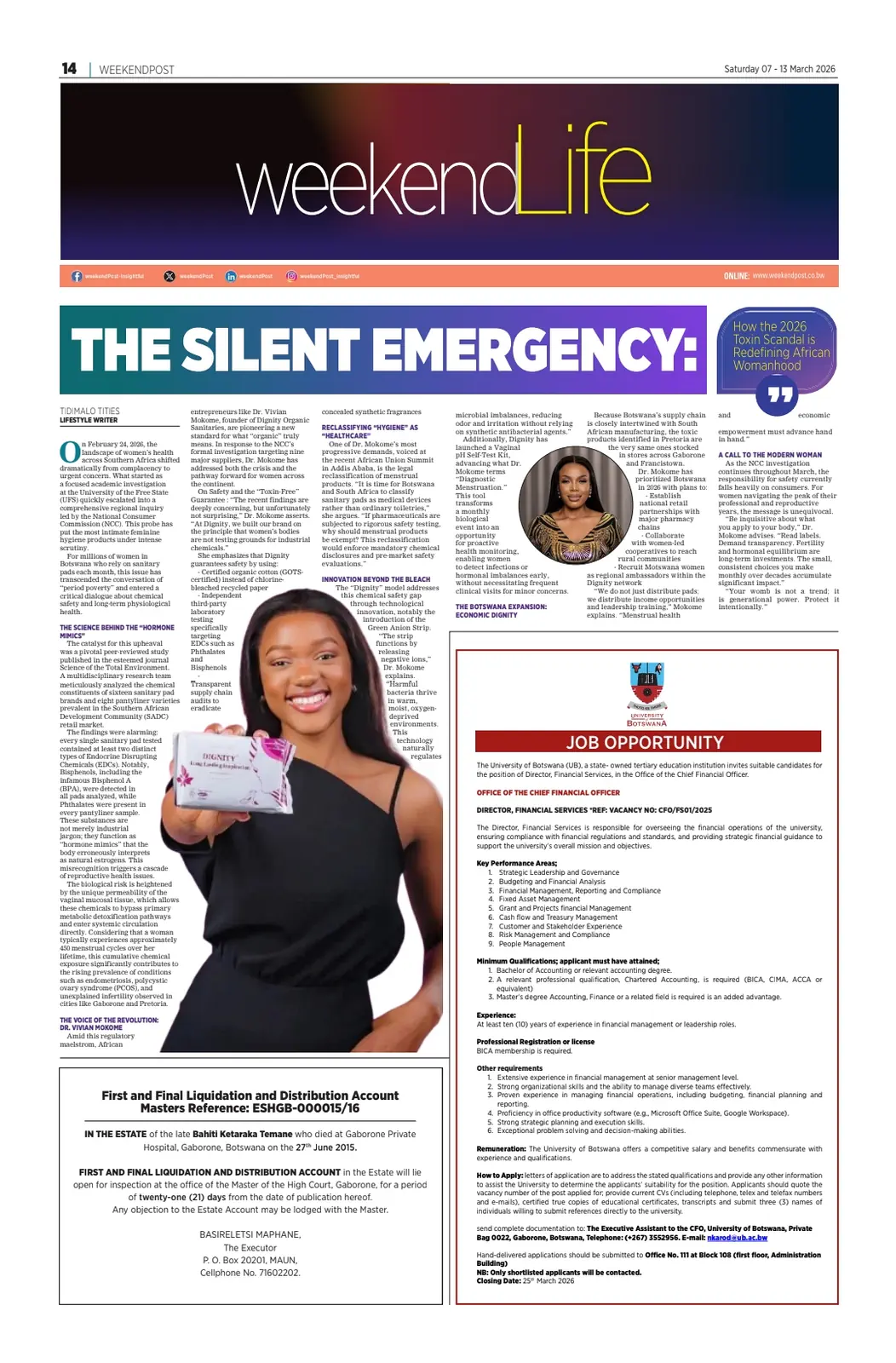
In early 2026, the landscape of women’s health across Southern Africa shifted from complacency to an absolute state of emergency. What began as a focused academic investigation at the University of the Free State rapidly escalated into a comprehensive regional inquiry by the National Consumer Commission (NCC).
The conversation has officially transcended "period poverty." We are now addressing a critical dialogue about chemical safety, bodily autonomy, and long-term physiological survival.
The Science Behind the “Hormone Mimics”
The catalyst for this upheaval was a pivotal peer-reviewed study published in the esteemed journal Science of the Total Environment. A multidisciplinary research team meticulously analyzed the chemical constituents of sixteen sanitary pad brands and eight pantyliner varieties prevalent in the Southern African Development Community (SADC) retail market.
The findings were devastating. Every single sanitary pad tested contained at least two distinct types of Endocrine Disrupting Chemicals (EDCs).
Notably, Bisphenols—including the infamous Bisphenol A (BPA)—were detected in all pads analyzed, while Phthalates were present in every pantyliner sample. These substances are not merely industrial jargon; they function as hormone mimics that the body erroneously interprets as natural estrogens. This misrecognition triggers a cascade of reproductive health issues.
The Biological Risk of Vaginal Exposure
The biological risk is severely heightened by the unique permeability of the vaginal mucosal tissue. Unlike standard skin exposure, this permeability allows these chemicals to bypass the liver's primary metabolic detoxification pathways. Instead, they enter systemic circulation directly.
Consider the math: a woman typically experiences approximately 450 menstrual cycles over her lifetime. This cumulative chemical exposure significantly contributes to the rising prevalence of conditions observed in cities across the continent, such as:
- Endometriosis
- Polycystic Ovary Syndrome (PCOS)
- Unexplained infertility
The standard industry practices that allowed these chemicals into our most intimate products are no longer acceptable. A new standard is required.
Reclassifying “Hygiene” as “Healthcare”
In response to the NCC’s formal investigation targeting nine major suppliers, Dr. Vivian Mokome, founder of Dignity Organic Sanitaries, addressed both the crisis and the pathway forward.
One of Dr. Mokome’s most progressive demands, voiced recently at the African Union Summit in Addis Ababa, is the legal reclassification of menstrual products. “It is time for Botswana and South Africa to classify sanitary pads as medical devices rather than ordinary toiletries,” she argues.
The logic is unassailable: if pharmaceuticals are subjected to rigorous safety testing before they ever reach a shelf, why should products pressed against highly permeable mucosal tissue for several days a month be exempt? This reclassification would enforce mandatory chemical disclosures and rigorous pre-market safety evaluations, effectively outlawing the use of hidden toxins.
Switch to Dignity Organic today. Experience the safety, breathability, and absolute peace of mind that comes with certified organic care.
Secure Your SupplyThe Toxin-Free Guarantee
While regulators debate, the responsibility for safety falls heavily on the consumer. Dr. Mokome asserts: “At Dignity, we built our brand on the principle that women's bodies are not testing grounds for industrial chemicals.”
How Dignity Organic Protects You
Dignity Organic does not just claim to be safe; we guarantee it through verifiable manufacturing standards:
- GOTS-Certified Organic Cotton: We use certified organic cotton instead of chlorine-bleached recycled paper or synthetic plastics.
- Independent Lab Testing: Rigorous third-party laboratory testing specifically targeting the absence of EDCs such as Phthalates and Bisphenols.
- Transparent Supply Chains: Comprehensive audits to definitively eradicate any concealed synthetic fragrances or chemical additives.
Innovation Beyond the Bleach
The "Dignity model" addresses this chemical safety gap through technological innovation. Harmful bacteria thrive in warm, moist, oxygen-deprived environments created by standard plastic pads. To combat this, Dignity introduced the Green Anion Strip. This technology naturally regulates microbial imbalances, reducing odor and irritation without relying on synthetic antibacterial agents that disrupt your body.
Furthermore, Dignity has advanced what Dr. Mokome terms "Diagnostic Menstruation" through the inclusion of a Vaginal pH Self-Test Kit with our products. This tool transforms a monthly biological event into an opportunity for proactive health monitoring, enabling women to detect potential hormonal imbalances or infections early.
Your Womb is Generational Power
Because the Southern African supply chain is so closely intertwined, the toxic products identified in Pretoria are the exact same ones stocked on shelves in Gaborone, Francistown, and beyond. In response, Dignity Organic is expanding aggressively, establishing national retail partnerships and recruiting women as regional ambassadors.
For women navigating the peak of their professional and reproductive years, Dr. Mokome's advice is clear:
- Be Inquisitive: Demand to know exactly what is in the products you apply to your body.
- Read Labels: If a brand hides their ingredients, they are hiding their liability.
- Think Long-Term: Fertility and hormonal equilibrium are long-term investments. The small, consistent choices you make monthly over decades accumulate into significant impact.
As Dr. Mokome powerfully states: "Your womb is generational power. Protect it intentionally."
Frequently Asked Questions
Join the movement of women refusing to compromise on their health. Explore our verified, organic feminine care today.